Bump Stocks & Braces: Understanding the Different Designs and Configurations
Bump stocks and firearm braces are two categories of accessories that have generated considerable interest among firearm enthusiasts, collectors, and people researching modern firearm configurations. Although they are sometimes discussed together, they serve different purposes and represent very different approaches to firearm design.
Understanding those differences starts with the basic function of each accessory.
A bump stock is an accessory designed around the interaction between the firearm and the shooter’s shoulder position. A brace, by comparison, was developed around providing additional support for a firearm, particularly configurations built around shorter platforms.
Both categories include multiple designs and configurations, and the differences are not always obvious from a quick look at a product photograph.
At Third Pin, the Bump Stocks & Braces category is intended to make those distinctions easier to understand. Rather than treating every product as interchangeable, the category can be explored through design, construction, configuration, compatibility, and the role each accessory plays within a broader firearm setup.
What Are Bump Stocks?
A bump stock is a firearm accessory designed to replace or incorporate the rear stock area of a compatible firearm while changing how the firearm interacts with the shooter’s shoulder and firing motion.
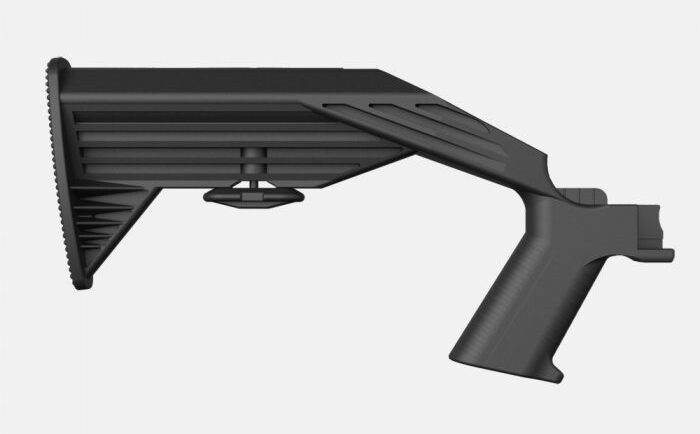
Unlike a conventional fixed stock, a bump-stock design incorporates movement into the interface between the firearm and the shooter. That difference is central to understanding why bump stocks are considered a distinct accessory category.
The category includes different designs that can vary in appearance, construction, adjustment features, and platform compatibility.
Some designs have a relatively straightforward appearance, while others incorporate additional components intended to influence how the stock moves or interfaces with the firearm.
For someone browsing the category for the first time, the important point is that a bump stock is not simply another version of a conventional rifle stock. Its defining characteristic is the way its design changes the relationship between the firearm, stock, and shooter.
Common Bump Stock Designs
Bump stocks can be grouped by several design characteristics.
Fixed-Profile Designs
Some bump-stock designs maintain a relatively straightforward external profile. These products may resemble conventional stocks at first glance while incorporating their distinctive internal or interface characteristics.
Their appearance demonstrates why product descriptions and specifications matter when comparing accessories.
Adjustable Designs
Other configurations incorporate adjustable elements.
Adjustment can affect the overall fit and positioning of the accessory, although the specific features vary considerably between products.
When comparing different designs, it is useful to examine the manufacturer’s listed specifications rather than assuming that all adjustable bump stocks provide the same range or configuration.
Platform-Specific Designs
Some accessories are developed around particular firearm platforms.
Platform-specific construction can affect dimensions, attachment points, profile, and overall compatibility. This is one reason that simply identifying an accessory as a “bump stock” does not provide enough information to determine whether it belongs with a particular firearm configuration.
Third Pin product listings can provide the relevant specifications for individual products where applicable.
What Are Firearm Braces?
Firearm braces are a separate category of accessory.
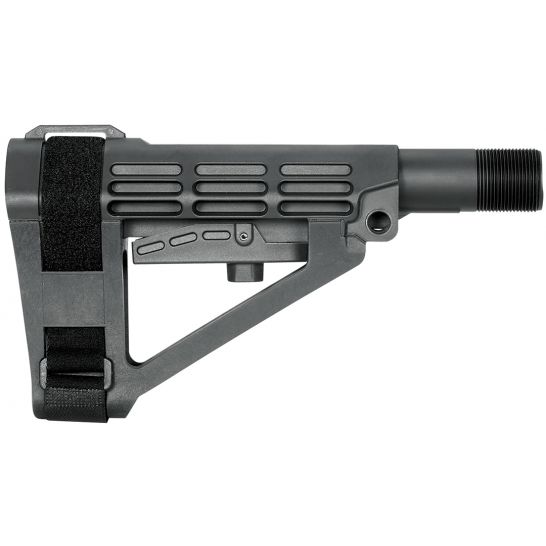
The original concept behind a brace was to provide additional support for certain firearm configurations, particularly compact firearms. Rather than functioning as a conventional shoulder stock, a brace was developed around supporting and stabilizing the firearm.
Over time, the category expanded to include numerous designs, materials, shapes, and attachment systems.
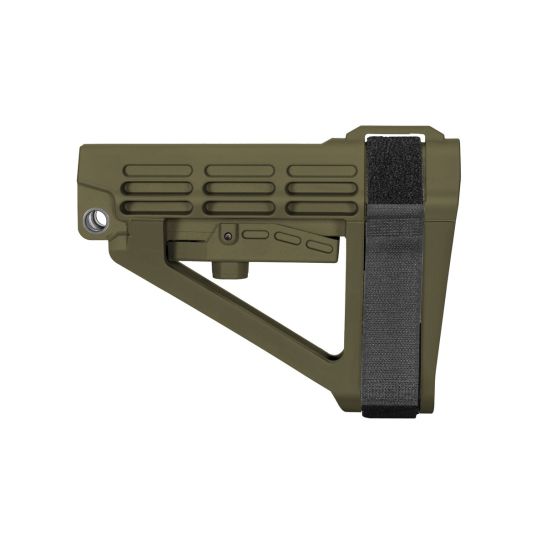
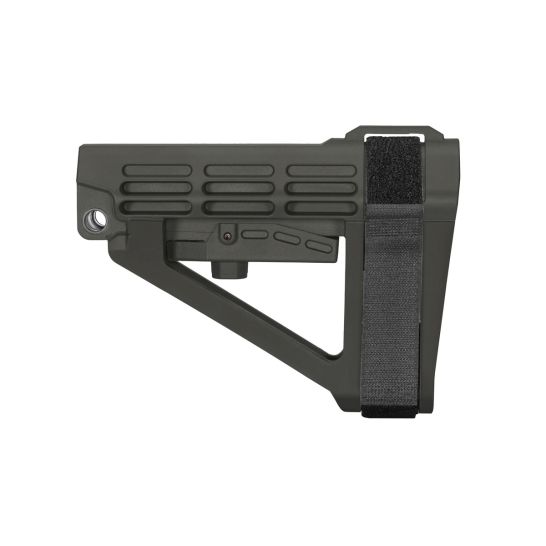
Today, braces can look substantially different from one another. Some have minimalist profiles, while others use more substantial structures. Some incorporate adjustable elements, while others use simpler fixed configurations.
This variety makes the brace category broader than one particular design.
Types of Braces
Stabilizing Braces
Stabilizing braces represent the core concept behind the category.
Their design focuses on providing additional support and stability to a compatible firearm configuration. Different manufacturers approach this objective differently, resulting in variations in shape, size, material, and adjustment.
Adjustable Braces
Adjustable braces incorporate mechanisms that allow the configuration to be changed.
The exact adjustment system depends on the individual product. Some designs use telescoping elements, while others use alternative adjustment mechanisms.
When comparing products, dimensions and manufacturer specifications are particularly important because similarly named accessories can have significantly different configurations.
Folding Braces
Folding designs incorporate a mechanism that allows the brace assembly to fold relative to the firearm.
The primary appeal of this design approach is its more compact storage profile. Folding configurations can therefore look quite different from fixed or telescoping braces.
However, folding mechanisms also introduce additional components, making construction and compatibility important considerations when evaluating individual products.
Compact Braces
Compact braces emphasize a smaller overall profile.
These designs can be useful for firearm configurations where minimizing the size of the rear assembly is an important consideration.
Compact does not necessarily mean identical, however. Products can differ in materials, dimensions, attachment arrangements, and adjustment features even when they occupy the same general category.
Bump Stocks vs. Braces
Although bump stocks and braces are often mentioned together, their underlying design concepts are different.
A bump stock is associated with a stock design that incorporates movement into the firearm-shooter interface.
A brace is associated with providing additional support for a firearm configuration.
The difference becomes easier to understand when looking at the intended design rather than the external appearance.
Both accessories occupy the rear portion of certain firearm configurations, which can make them appear similar in photographs. However, their design objectives are not interchangeable.
For Third Pin visitors, understanding this distinction is useful when browsing the category because it provides a foundation for recognizing the products and terminology used in individual listings.
Construction Materials and Design
Materials play an important role across both categories.
Manufacturers can use different metals, polymers, composites, and other materials depending on the design objectives of a particular accessory.
Material selection can affect weight, durability, appearance, rigidity, and overall construction.
For example, two accessories may have similar dimensions but use different materials and therefore offer different characteristics.
This is why Third Pin product descriptions should be considered alongside photographs. A visual comparison can show the general shape of an accessory, while specifications provide the information needed to understand its actual construction.
Adjustable vs. Fixed Configurations
One of the easiest ways to compare products within the category is to look at whether the design is fixed or adjustable.
Fixed configurations generally maintain one defined position or profile.
Adjustable configurations provide some ability to change the position or dimensions of the accessory.
Neither approach automatically makes one product superior to another. They simply reflect different design priorities.
For shoppers and researchers comparing the Third Pin category, this distinction can make it easier to narrow down products based on the characteristics that matter most to them.
What Makes Bump Stocks and Braces Different?
Several characteristics distinguish products within these categories:
Overall dimensions
Construction materials
Adjustment mechanisms
Folding or fixed configuration
Attachment design
Platform compatibility
Weight
External profile
Looking at these specifications together provides a much clearer picture than relying on the product name alone.
This is particularly important because firearm accessories can use similar terminology while having substantially different designs.
Explore Bump Stocks & Braces at Third Pin
The Bump Stocks & Braces category gives Third Pin visitors a place to explore two specialized accessory categories and understand the differences between their designs.
From fixed and adjustable configurations to compact, folding, and platform-specific designs, there are several characteristics worth examining when comparing products.
Third Pin’s goal is to make that research easier by bringing related accessories together while providing useful information about their construction and configuration.
If you’re researching the category, start with the basic distinction between bump stocks and braces, then compare individual products according to their listed specifications, construction, configuration, and intended application.
Final Thoughts
Bump stocks and braces may occupy similar areas on certain firearm configurations, but they represent distinctly different accessory concepts.
Bump stocks are defined by their distinctive stock design and shooter-interface characteristics, while braces were developed around providing additional support for compatible firearm configurations. Within both categories, manufacturers have introduced fixed, adjustable, folding, compact, and platform-specific designs.
Understanding those differences makes it easier to navigate the category and recognize what separates one product from another.
Explore the Bump Stocks & Braces category at Third Pin to compare the different designs and configurations represented in the collection, and review the specifications for each individual product before making any decisions.