
AR15 Auto Sears
What Is an Auto Sear? A Complete Guide to AR-15 Conversion Types
An auto sear is a mechanical component that converts a semi-automatic AR-15 rifle into an automatic firearm. It bypasses the standard semi-automatic trigger reset, automatically releasing the hammer to fire the next round the exact moment the bolt carrier group (BCG) locks forward into the chamber.
The various types of conversion methods generally fall into three distinct mechanical categories.
1. Hammer-Catching Auto Sear Designs
These devices work by physically catching and holding the hammer back after a shot is fired. They release the hammer only when the bolt carrier group moves fully forward into battery.
Factory M16 Sear
The standard military design. It requires a specific “third pin hole” machined directly into the lower receiver to mount the sear lever.
Drop In Auto Sear (DIAS)
A self-contained metal block housing a sear lever. It drops into the rear cavity of a standard AR-15 lower receiver, eliminating the need to drill a third hole.
2. Disconnector-Overriding Links
Instead of catching the hammer, these devices attach to the trigger mechanism. They work by mechanically pulling or pushing the disconnector out of the way, allowing the hammer to fall immediately after the bolt cycles forward.
Lightning Link
A vintage, two-piece, stamped sheet metal device from the 1970s and 1980s. It loops around the rear takedown pin and pulls the disconnector backward as the bolt carrier cycles.
Swift Link
A modern, simplified evolution of the Lightning Link. It is a single vertical piece of metal or plastic that pushes down on the disconnector when struck by the bolt carrier.
3. Digital and 3D-Printed Auto Sear Variations
These are modern CAD-designed files distributed online, intended for fabrication via 3D printing (FDM or SLA) or desktop CNC milling.
Yankee Boogle
A widely distributed open-source CAD file designed to 3D print a functional Drop-In Auto Sear (DIAS) optimized for plastic tolerances.
AR-15 Compatibility Requirements for Auto Sears
An auto sear cannot simply be dropped into any standard, off-the-shelf AR-15 rifle. For an auto sear or conversion link to function, the host firearm must feature specific internal component dimensions and receiver geometry.
The Bolt Carrier Profile
Standard semi-automatic AR-15 bolt carrier groups (BCGs) are explicitly machined with material missing from the underside of the rear portion. To trip an auto sear, the rifle must utilize an M16-profile (or “full-auto”) bolt carrier. This military-style carrier features an extended, solid steel shroud on the bottom rear that physically strikes and trips the auto sear or link as the bolt cycles into battery.
Lower Receiver Pocket Dimensions
The internal cavity of the aluminum lower receiver, known as the trigger pocket, varies heavily by civilian manufacturer:
-
- Low-Shelf Receivers: These lowers are machined with a deeper, lower floor cavity behind the safety selector. This extra clearance provides the exact physical space required to house a Drop-In Auto Sear (DIAS) or a 3D-printed Yankee Boogle.
- High-Shelf Receivers: To prevent conversion, many manufacturers intentionally leave excess metal behind the safety selector, raising the floor of the pocket. A DIAS cannot physically fit inside a high-shelf lower. However, vintage conversion links (like the Lightning Link) were historically designed to sit higher up, bridging across the top of a high-shelf receiver.
- M16-Pocket/Full-Cut Receivers: These feature a completely open interior cavity cut to military specifications. While they contain the physical space for any conversion device, they still lack the “third pin hole” required to mount a traditional factory M16 sear unless specifically machined by a licensed manufacturer.
Showing all 3 results
-
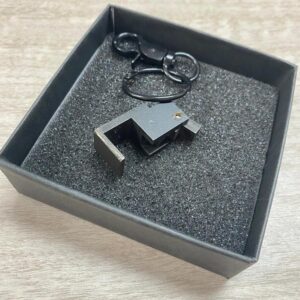
Drop in Auto Sear
$180.00 -
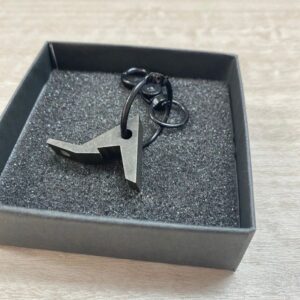
Type 3 AR15 Swift Link Auto Sear
$135.00 -
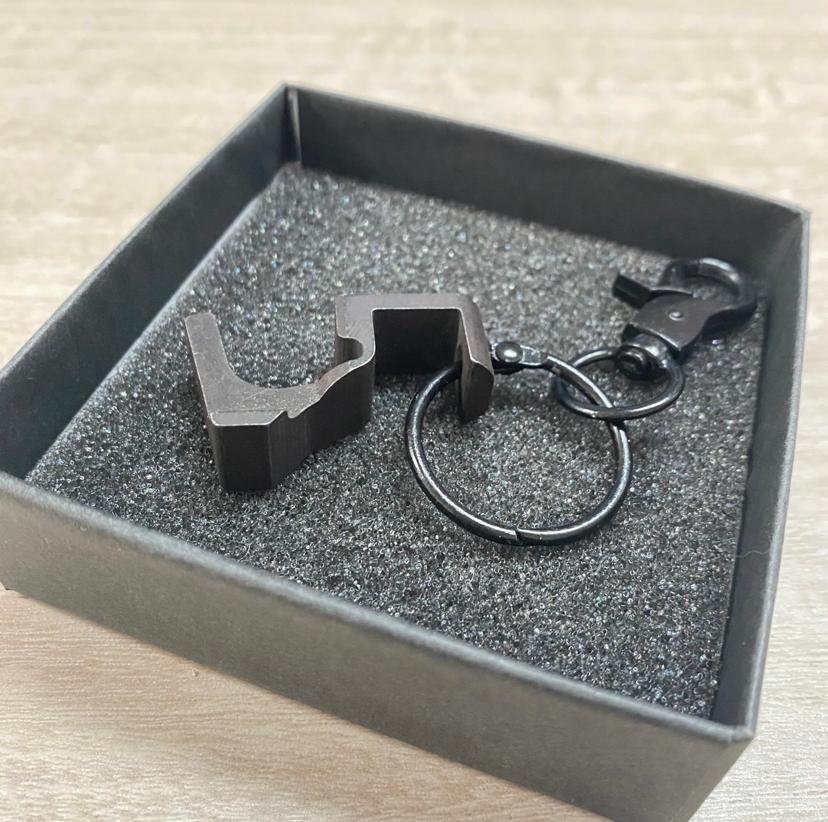
Yankee Boogle Auto Sear
$150.00